French Montana / Editorial programme
Liner
notes.
Give French a column on X and put a recorder on the mixing desk. Start with one verse, the second take and the person who heard the difference.
Proposed weekly X Article
From the mixing desk
At the first session, ask French to bring a verse, a cut he nearly kept and a collaborator who remembers why it changed. Record the conversation while they play both takes. Get the timecode right, let the guest check their credit and give French the final read.
Lead with the English edition on X. Publish the Chinese edit here with the same audio and credits. Put the producer’s name under the title when the piece is theirs. Reserve French’s byline for copy he approves.
Leave the snare alone
Four bars at 96. The kick lands in the same place on both takes. So does the snare. Play A and you could knock on the drumhead. Switch to B. Now you can hear the walls.
Try it halfway through bar two. Ignore the kick for a pass and listen to the gap after the snare. On B, that little tail hangs around until the next hit. On A, the gap belongs to whoever takes the mic.
With a verse coming in, I’d print A and keep B for the walk-out. That choice is yours on the player. Give it two passes and jot down the bar where you changed your mind.
The first month
Four commissions
- Wk 01 / The edit
What stays on the record?
Run the drum study as the opener. Follow it with an approved verse session: two takes, a timecode and the producer’s explanation of the edit.
- Wk 02 / The image
Eight seconds on a cassette
Take one photograph to the cutting room. Put a locked-off shot beside a slow push-in and ask which one holds the last beat. Include the camera brief below.
- Wk 03 / The guest
Who gets the first eight?
Invite a Bronx or Moroccan collaborator to bring an original four-bar loop. Interview them about the first eight bars they would give French. Print their name, their words and the version they picked.
- Wk 04 / The flip
The tape with no ending
Introduce WAVE-0 in a short silent scene. Pair it with French’s approved production note. Let readers pick which of two cleared objects the archivist retrieves next.
Studio tutorial / MiniMax H3 + Suno Studio
Cut the same eight seconds twice
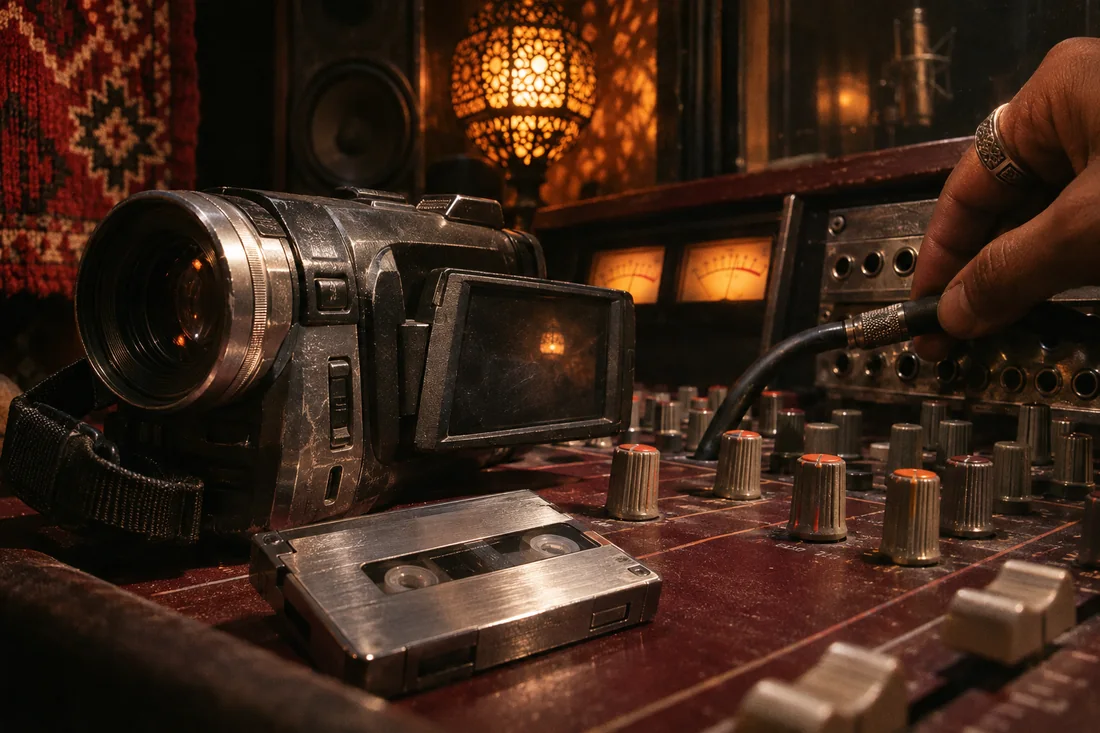
- Shoot the reference. Put a cassette next to a window. Take one landscape still. Write down who shot it and where the desk and light sit.
- Make two H3 clips. In a MiniMax H3 interface that accepts a still, attach your photo to both runs. Request eight seconds, 16:9 and the same light. For A, lock the camera. For B, ask for one slow push toward the left reel. Watch for the spool changing shape.
- Print one bed. In Suno, sketch an original instrumental: “96 BPM, dry kick, close snare, a little metal on the offbeat, one low bass note.” In Studio, trim a four-bar region and export Selected Time Range. Multitrack exports parts for a DAW. Trim the same eight seconds for both picture cuts and mute the generated soundtracks.
- Screen the pair. Start both cuts on the same downbeat. Watch once with sound and once muted. Write down the first frame that pulls your eye off the reel. Save that timecode with the take you keep.
Production tool / Take Review
A seat at the desk
The player carries two mixes of the same original beat. Switch while it runs, pick a take and export the note. The downloadable Skill gives a second producer the same listening order, so both can compare their calls after the session.
For an artist session, the proposed desk adds local import for two cleared recordings. Line up the first hit, match playback level and hide the filenames. French and the guest each mark one timecode before revealing their picks. A single session sheet carries the credits, selected take and edit request to the mix engineer.
Two-episode character test
WAVE-0 keeps the tapes
Draw one figure with a deck under its arm and a paper label on each tape. Give it eight seconds to find a rehearsal cassette with a missing ending. A real guest supplies the final four bars. Let the character speak through its labels and the sound of the transport.
Open the second episode with the object readers picked in week four. Credit its contributor with permission. The pilot needs a character sheet, original sound cues, two short cuts and permission for each submitted recording. Keep the performance and illustration credits on the last frame.